Two kinds of federal rule touch the central air conditioner and gas furnace you already have. Refrigerant rules decide which refrigerant new systems may use, who may handle it and who may buy it. Efficiency rules set the minimum SEER2 for a new air conditioner and the minimum AFUE for a new furnace. The short version: none of them makes you replace a working system. R-22 and R-410A systems may still be used and repaired, an older AC is not unlawful to keep running, and an 80% furnace already in your home is not affected by the 95% rule for furnaces made from 18 December 2028. What they change is what a repair or replacement involves, and what to ask before you sign a quote. This guide takes them in the order most owners meet them and points to the page that covers each in full.
- If you smell gas: leave the house now. Don’t switch lights or appliances on or off, don’t use a phone inside, and don’t try to find the leak. From outside or a neighbor’s home, call 911 or your gas utility’s emergency line (PHMSA).
- If a carbon monoxide alarm sounds: get everyone outside into fresh air, call 911 or the fire department from outside, and don’t go back in until responders say it’s safe (CPSC). Headache, dizziness, weakness, nausea, chest pain or confusion that eases away from home can be carbon monoxide (CDC). Don’t run the furnace again until a technician has checked it.
General information, not professional advice. Your system’s maker, your manual and a qualified technician decide what’s safe for your equipment, and local codes decide what needs a permit or a licensed installer.
First: refrigerant is technician work, by law
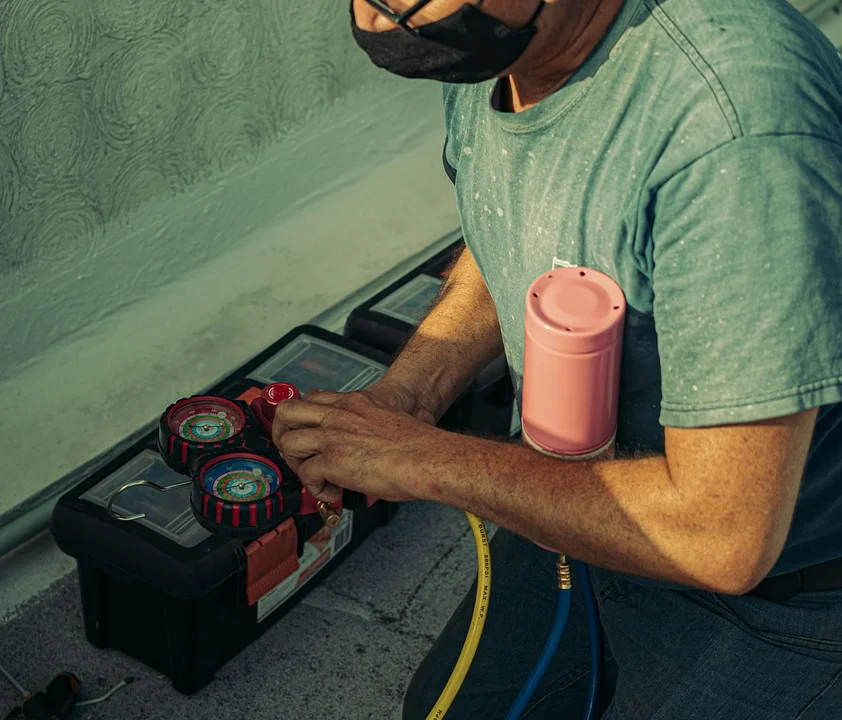
Under Section 608 of the Clean Air Act, anyone who attaches or detaches hoses and gauges, adds or removes refrigerant, adds or removes components or cuts a refrigerant line counts as a technician and must be EPA-certified; there is no homeowner exception (40 CFR 82.152). Refrigerant for home systems may be sold only to certified technicians and the businesses that employ them; the small cans sold in stores are for car air conditioning (82.154(c)). Knowingly venting refrigerant while servicing or scrapping a system is illegal (82.154(a)). So no page here gives a step for adding, recovering or checking refrigerant: they give the rule, the signs and the questions to ask.
Which refrigerant do you have?
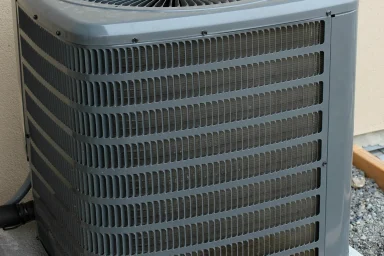
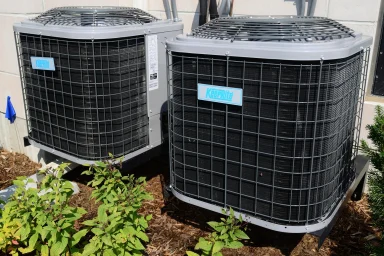
Read the outdoor unit’s nameplate from outside, without opening any panel; EPA says the refrigerant is typically listed there. You will most likely see R-22, R-410A, R-454B or R-32. A “Risk of Fire. Flammable Refrigerant Used” warning and red-marked service ports point to one of the two newer refrigerants. Note the model and serial numbers too: any technician will ask.
R-22: legal to use, no longer made
Production and import of R-22 in the US ended on 1 January 2020. In EPA’s words, you may keep using an R-22 system “for as long as necessary”, serviced with refrigerant made before 2020 or recovered and reclaimed R-22. EPA says there are no “drop in” replacements, and products sold as “R-22a” are flammable hydrocarbon blends it lists as unacceptable. Our page on what the R-22 phase-out means if you still have it covers the 2030 step, replacing only the outdoor unit, and the questions to ask.
R-410A: not banned
Since 1 January 2025, a new home split system using a refrigerant with a global warming potential (GWP) of 700 or more, which takes in R-410A at 2,090, may be installed only where every main part was made or imported before that date (40 CFR 84.54(c)(1), as amended by EPA’s rule of 26 May 2026, in effect 27 July 2026). Existing R-410A systems may still be used, repaired and recharged by a certified technician, and new replacement outdoor units and coils are still sold, labelled “For servicing existing equipment only”. The catches: EPA’s 2026 rule treats replacing both the outdoor unit and the indoor coil as installing a new system, a bigger system counts as a new one, and New York’s rule is stricter. R-410A after 2025: what’s allowed now sets each case out with the rule text.
R-454B and R-32: the new refrigerants
New central air conditioners since 2025 use R-454B (GWP 470) or R-32 (675), both below the 700 limit. Both are safety class A2L, lower flammability, which is why the equipment carries warning labels, red service ports and often a leak sensor at the indoor coil. On a furnace-and-AC system the sensor reports to the furnace, which the makers’ documents we read describe shutting off gas heat and running its blower on a leak. Lennox’s instructions say disabling that detection “is prohibited by safety codes”. Neither refrigerant can be put into an existing R-410A or R-22 system. R-454B and R-32 explained covers the labels, the leak codes and what to do if your furnace shows one.
If you think it’s leaking
A central air conditioner doesn’t use refrigerant up: it circulates in a sealed loop, so a system that is low has a leak somewhere. The signs (long run times, ice on the indoor coil, a hiss near the lines, oily residue at fittings) can also come from a dirty filter or blocked vents, so the owner checks come first. Neither federal leak-repair rule reaches a home central AC (40 CFR 82.157(a); 84.106(a)(3)(ii)), so repair or top-up is a choice between you and the technician. EPA’s advice to homeowners is to ask for the leak to be located and repaired instead of “topping it off”. AC refrigerant leaks: signs, and what the law says about recharging has the owner checks, where they stop, and what a proper repair looks like.
Efficiency ratings and the rules behind them
SEER2 and the regional AC rules
SEER2 is the cooling an air conditioner delivers over a season divided by the electricity it uses, in Btu per watt-hour, under the Department of Energy test in use since 1 January 2023. It reads lower than the older SEER for the same equipment, and no official formula converts one to the other. A new split-system AC needs at least 13.4 SEER2 nationally; one installed in the Southeast or Southwest needs 14.3 SEER2 below 45,000 Btu/h, or 13.8 at 45,000 and above, and the Southwest adds EER2 levels (10 CFR 430.32(c)(5) and (6)). The regional rule binds distributors, contractors and dealers, not you: if a unit is installed in breach of it, “the end user cannot be charged” for the remedy (10 CFR 429.154). The SEER2 cooling cost calculator turns two ratings into kWh and dollars from your own bills or your state’s averages.
AFUE and the 2028 furnace rule
AFUE is the share of a furnace’s fuel that becomes heat in your home over a typical year, in a federal lab test. The federal minimum for an indoor gas furnace today is 80%, nationally, with no regional furnace level; in the code, “gas” includes propane. A rule already in 10 CFR 430.32(e)(1)(iii) raises that to 95% for indoor and mobile home gas furnaces made from 18 December 2028. Its status: on the books for furnaces made from 18 December 2028; under legal review; may change (checked 10 November 2026). It applies by manufacture date and does not reach a furnace already installed. AFUE and the 2028 furnace rule shows how to tell a condensing furnace by its vent pipes, what a switch can mean for the chimney and a shared water heater, and how to estimate the fuel difference from your own gas bill.
Claims you may hear, checked
- “R-22 is illegal to use” or “R-410A is banned.” False. Both may still be used and serviced; only new production (R-22) or new installations (R-410A) are restricted.
- “You can top up your own AC with a can from the store.” False for home AC. Small cans are for car AC.
- “Your 80% furnace becomes illegal in 2028.” False. The 95% standard governs furnaces made from that date, and is under legal review.
- “There’s a federal tax credit for a new AC or furnace this year.” Not for 2026. The IRS says the credit covers improvements made through 31 December 2025.
Your next step
Read the outdoor unit’s nameplate (refrigerant, model, serial), then the furnace’s rating plate inside its door, and note its vent: plastic pipes and a drain line, or metal into a chimney. When a repair comes up, ask whether the technician is Section 608 certified, whether this is a leak repair or only a top-up, and which refrigerant and how much goes in, and get the answers on the invoice. To weigh a big repair against a replacement with your own quotes, use the repair or replace check. A gas smell or a carbon monoxide alarm can’t wait: leave and call from outside.
Figures and rules here come from the linked guides, which cite the federal text, the agency page or the maker document at each claim. Sources checked on 10 November 2026.