When a central air conditioner or gas furnace won’t start, the fault is often not the big machine but one of the small parts that tell it when and whether to run: the thermostat and its 24-volt wiring, the furnace’s pressure switch, ignitor or pilot, and flame sensor, and the contactor and capacitor in the outdoor unit. The guides below explain what each part does, the signs and codes the makers give, what you can check yourself, and where a technician takes over.
If you smell gas: leave the house now. Don’t switch lights or appliances on or off, don’t use a phone inside, and don’t try to find the leak. From outside or a neighbor’s home, call 911 or your gas utility’s emergency line (PHMSA). Don’t touch the thermostat either: changing the setting can start or stop equipment.
If a carbon monoxide alarm sounds: get everyone outside into fresh air, call 911 or the fire department from outside, and don’t go back in until responders say it’s safe. Headache, dizziness, weakness, nausea, chest pain or confusion that eases away from home can be carbon monoxide (CPSC; CDC). Don’t run the furnace again until a technician has checked it. More in carbon monoxide and your furnace.
General information, not professional advice. Your system’s maker, your manual and a qualified technician decide what’s safe for your equipment, and local codes decide what needs a permit or a licensed installer.
How the parts work together
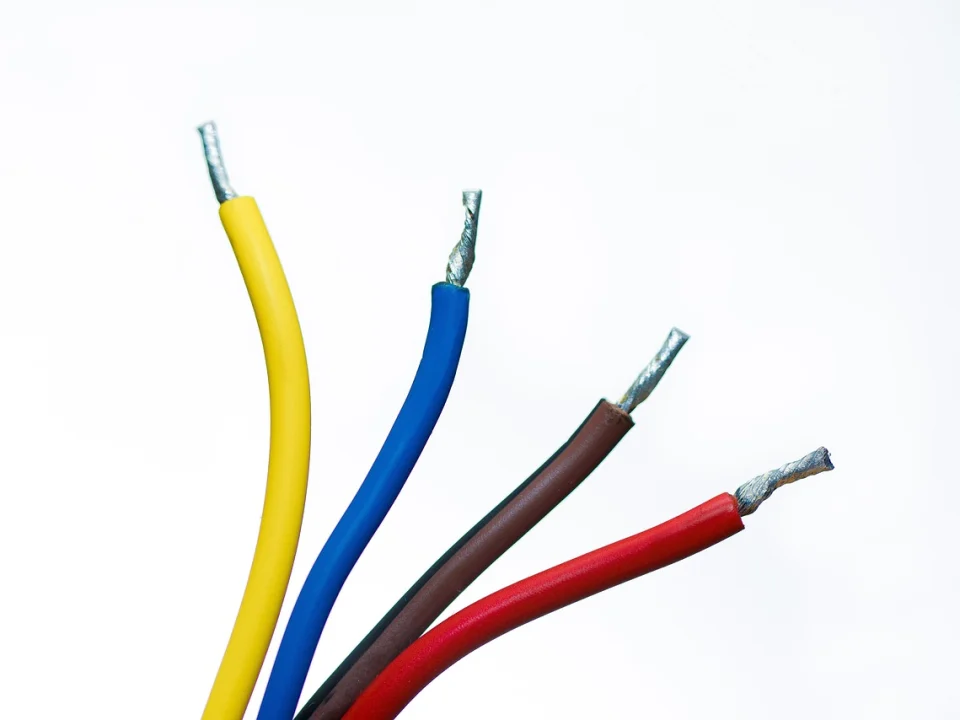
A central system’s thermostat is a switch on a low-voltage control circuit. A small transformer in the furnace or air handler turns household power into about 24 volts, which runs up to the thermostat on the R wire. To call for heat, the thermostat connects R to W. To call for cooling, it connects R to Y and the fan wire G. The C wire completes the circuit, so a thermostat with a screen can draw steady power from it (Goodman RS6621301, p. 4; Lennox M30 guide 507739-02, 3/2025, p. 7).
On a call for heat, a modern gas furnace runs a fixed start-up sequence. The inducer, a small fan, starts pulling air through the furnace and out the vent. The pressure switch must close to prove that suction is there. Then the hot surface ignitor heats until it glows, and the gas valve opens onto it. Within a few seconds the flame sensor has to prove that the burners lit, or the control board shuts the gas off, waits and tries again. After a set number of tries it locks out and shows a code. Older furnaces light from a standing pilot flame instead.
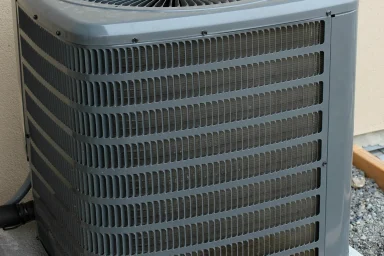
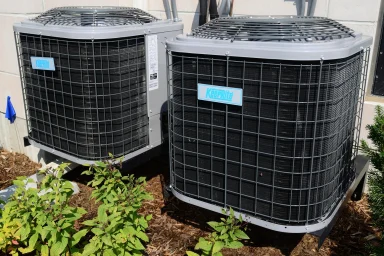
On a call for cooling, the 24-volt signal travels on to the outdoor unit, where it energizes the coil of the contactor. The contactor closes and sends the unit’s 240-volt supply to the compressor and the outdoor fan. A capacitor beside it gives those motors the push they need to start, then helps keep them running.
Start at the thermostat
A blank or ignored thermostat is often fine itself: it has lost power or settings, or the furnace has cut the circuit on purpose (a switch or breaker off, a blower door ajar, a float switch tripped by a full drain pan, a blown board fuse). Our thermostat not working check goes through these in order, from the mode and batteries to the board fuse, with the stop points: a breaker that trips again, a fuse code, water near electrical parts.
Sometimes nothing is wrong at all. Many thermostats hold the compressor off for a few minutes after it stops, or after a power cut, to protect it. Resideo’s guides for Honeywell Home thermostats say the wait lasts up to five minutes and flashes “Cool On” until it ends. Our page on a thermostat flashing “Cool On” shows how to tell a normal wait from one that points to voltage or wiring.
If you’re swapping a thermostat or a wire has come loose, thermostat wiring by terminal letter covers what each letter means, why a wire’s color is only a clue, the C wire, and the order the thermostat makers give for a swap, with the power off at the furnace switch and the breaker. Thick wires joined with wire nuts behind the thermostat mean household voltage, not 24 volts: stop there.
The furnace’s start-up parts
Read the code through the window in the blower door before you switch anything off, because a power cycle can clear it. Our furnace error code lookup gives the makers’ meanings. Then follow the sequence:
- The inducer hums and nothing lights. That often points to the pressure switch, which checks that the flue gases have somewhere to go. A pressure switch code usually means the suction wasn’t there, because of the vent, the intake, the tube, the inducer or a condensing furnace’s drain, so a new switch fixes it only when the switch itself failed. See what a furnace pressure switch code means, including checking the vent ends outside for snow and ice.
- No orange glow, no flame, then retries and a lockout. The hot surface ignitor is a common cause, but its wiring and the control board can give the same signs. The page gives Carrier’s replacement steps for one furnace.
- The burners light, then go out within seconds. The flame sensor may not be proving the flame, most often because of a coating on the rod, but also its wire, its ground or a poor flame. The page gives Carrier’s cleaning procedure and who the makers say should do it.
- An older furnace with a knob marked OFF, PILOT and ON. Only older furnaces have a pilot you light yourself. Lighting a furnace pilot light by the label starts by checking which kind of ignition you have: the current Carrier, Lennox and Trane furnaces in the owner manuals we read light themselves, and those makers say never to light them by hand.
If the furnace is completely silent, with no inducer and no code, the problem is earlier in the chain: see furnace not turning on.
The outdoor unit’s switch and starter
The AC contactor fails in three ways: it doesn’t close and the outdoor unit stays silent, its contacts burn or pit and pass power poorly, or it sticks closed and the unit won’t stop. Ants can pack the gap between its contacts too. A failing AC capacitor usually shows as an outdoor unit that hums while the fan stands still, a click without a start, a tripped breaker, or warm air from the vents. None of these signs proves which part failed; a technician tests with a meter.
Both parts sit in the outdoor unit’s control box on 240 volts, and a capacitor can hold a charge after the power is off. So your checks stay outside the cabinet: the thermostat, the breakers, the outdoor disconnect by sight, and looking and listening with every panel closed. If the unit hums without starting, set the thermostat to Off: Carrier and Bryant warn that running on a failed capacitor can damage the compressor or fan motor.
Where your part stops
You check what the makers print for owners: thermostat settings and batteries, the furnace switch and breakers (there may be more than one disconnect, Trane says), the blower door, the filter, the gas valve, the code, and one lockout reset only where your manual prints it. Stop at a gas smell or CO alarm, a breaker that trips again, a code that comes back after one reset, water near electrical parts, a burning smell, or a furnace that has been under water: Carrier and Trane say not to use it if any part has been under water.
The furnace part pages also give the repair steps a maker prints in its service documents, such as cleaning a flame sensor or replacing an ignitor, with every caution at its step. Goodman, Lennox and Trane tell owners not to service the unit, and Trane says do-it-yourself repairs on an in-warranty unit may void the warranty. If you’re not comfortable, or the code comes back, stop and call a technician. Some states and cities require a licensed gas fitter or a permit for gas work: ask your building department.
Never jumper, tape or bypass a pressure switch, limit or rollout switch, flame sensor, door switch or float switch to get heat or cooling back. With a pressure switch bypassed, a furnace can fire into a blocked vent. Never open the outdoor unit’s electrical panel, touch the capacitor or contactor, or push a fan or contactor to start it. After any furnace repair, run a full heating cycle with the doors on, watch for the code, and keep a working CO alarm on every level of the home.
Before you call
- The code or flash pattern on the furnace board, exactly as shown, and when it appeared.
- The model and serial numbers from the rating plates on the furnace or air handler and the outdoor unit, and the thermostat’s make and model.
- What you saw and heard: did the inducer run, was there an orange glow, did the flame light and drop out, did the outdoor unit hum, click or stay silent?
- What changed: a new thermostat, a filter change, a power cut, water near the furnace.
Then ask what the part measured against the maker’s figure for it, whether the replacement is the part the maker lists for your model, why it failed, and whether it’s under warranty. A gas smell, a CO alarm or a burning smell from wiring can’t wait: leave or switch off first, then call.
Sources checked on 10 November 2026. Every maker document is named with its number and edition in the guides linked above.